 Image: Rita Willaert from 9890 Gavere, Belgium (CC BY 2.0)
The day the Atlantic conveyor nearly stopped
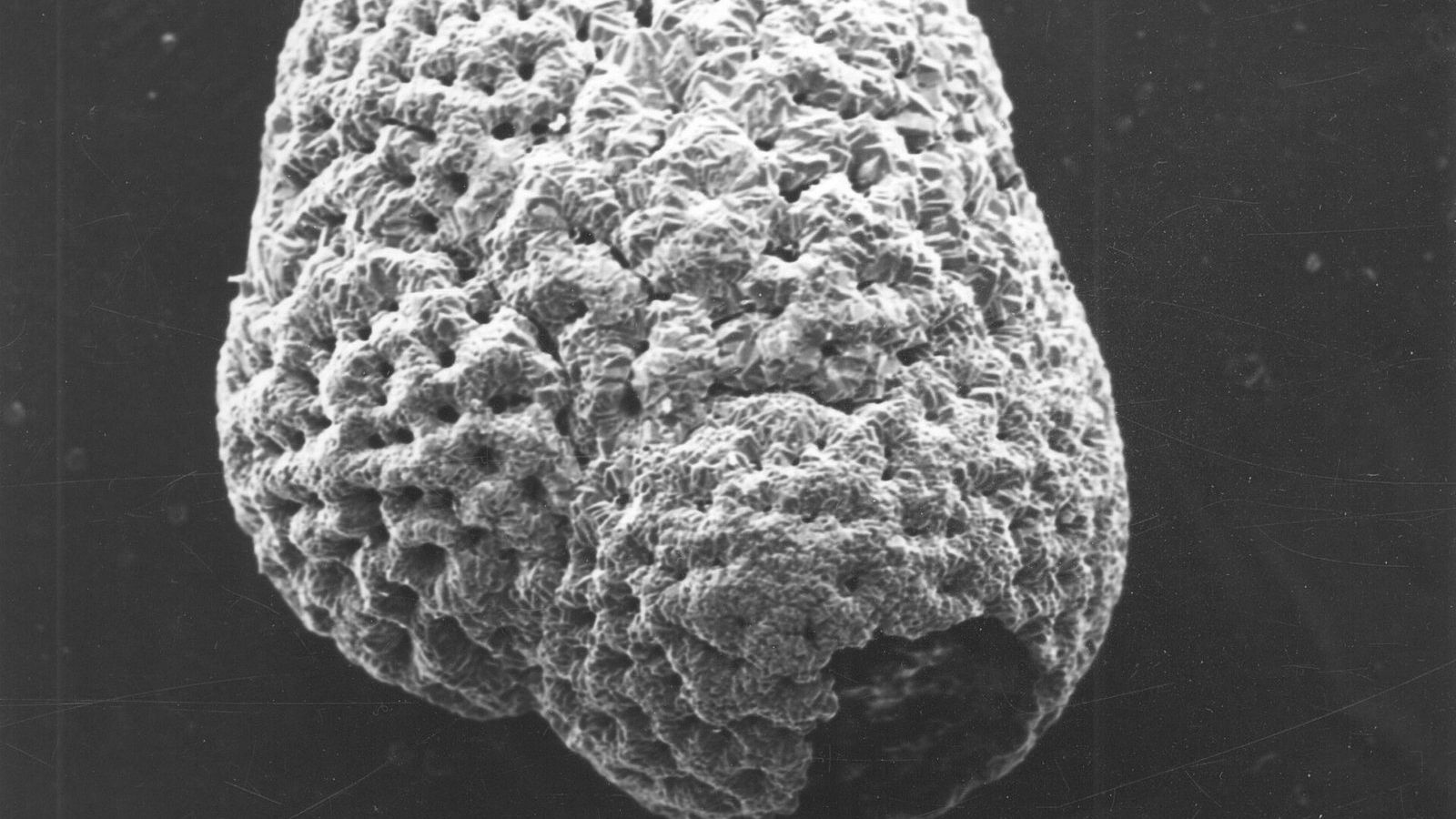
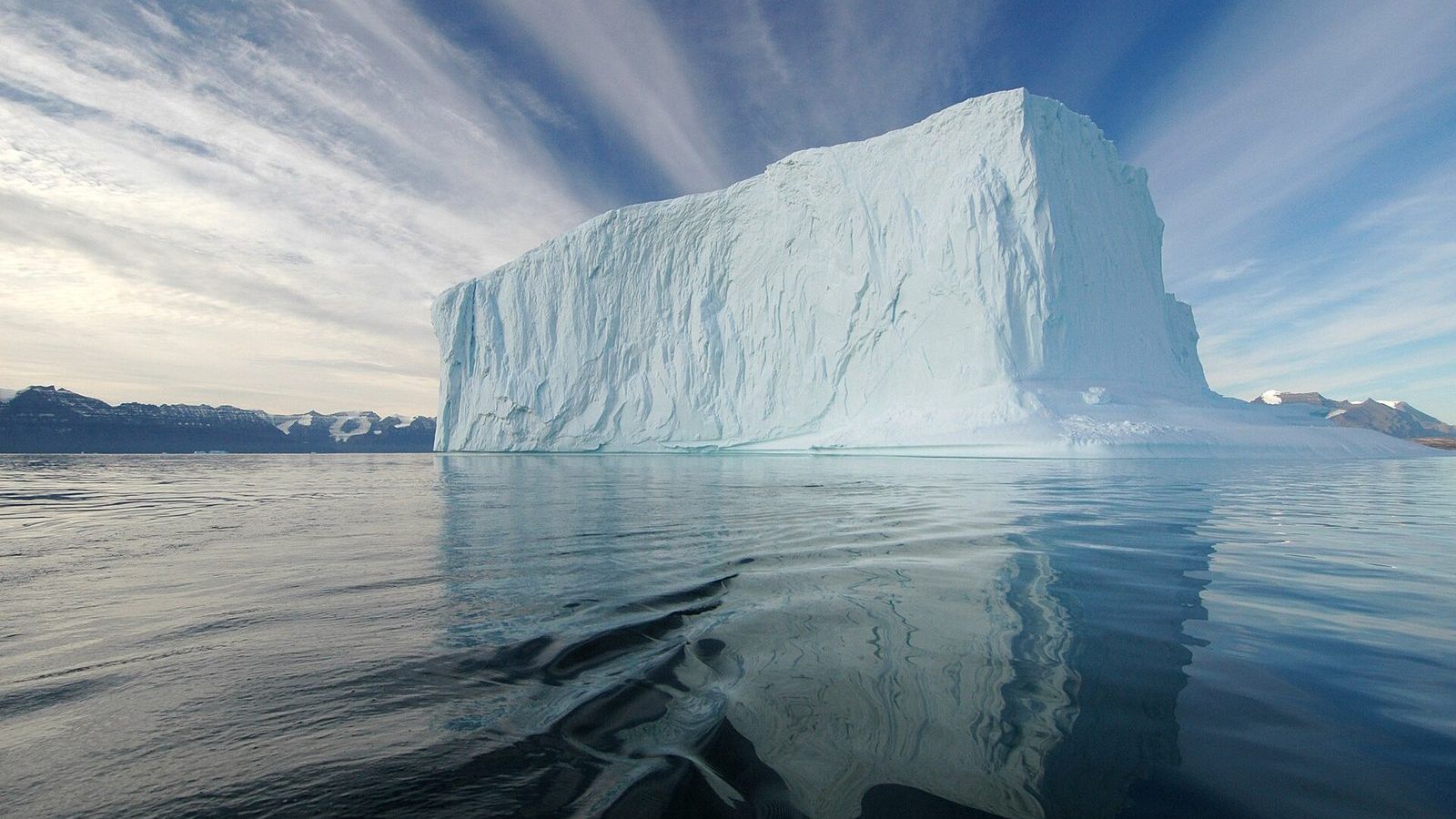
In 1988 the German marine geologist Hartmut Heinrich described six layers in cores from the North Atlantic that did not belong. Between the ordinary ooze of foraminifera shells lay bands of sand and gravel, fragments of limestone and granite from Canada, dropped onto the seafloor between Newfoundland and Portugal by melting icebergs. Each layer records a few centuries in which the Laurentide ice sheet, through Hudson Strait, discharged icebergs into the Atlantic at a rate that has no modern comparison. The layers are now called Heinrich events, numbered from the most recent, and the youngest of them, Heinrich event 1, about 17,000 to 16,000 years ago, is the best-studied case of what fresh water does to the ocean's overturning.
Why icebergs matter to a current
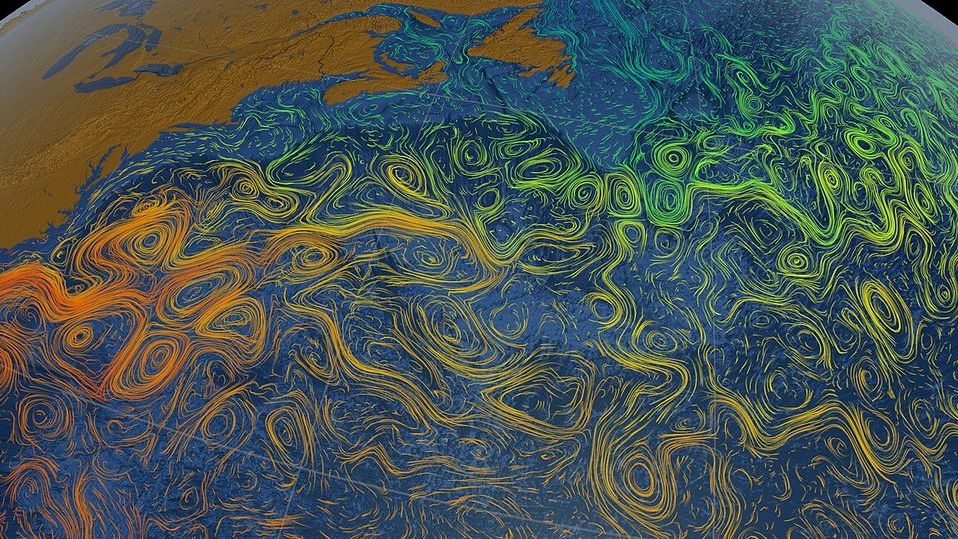
The Atlantic overturning works because the surface water that flows north becomes dense enough, by cooling, to sink in the Nordic and Labrador Seas and return south at depth. Density depends on salt as well as temperature, and a layer of fresh meltwater on the surface of the subpolar Atlantic is a lid: it is too light to sink however cold it gets. Henry Stommel showed in 1961 with a model of two connected boxes that such a circulation has two stable states, on and off, and that a large enough freshening can flip it from one to the other. Wallace Broecker asked in 1985 whether the climate system had more than one stable mode and suggested the Atlantic was the switch. The Heinrich layers were the first place to look for the switch being thrown.
The thorium clock
Showing that the overturning slowed is harder than showing that the icebergs came, because a current leaves no sediment. The trick, applied by Jerry McManus and his colleagues in 2004, uses two isotopes made from uranium dissolved in seawater: protactinium-231 and thorium-230. Both are produced at a fixed ratio, 0.093, everywhere in the ocean, and both stick to sinking particles and end up in the mud, but thorium sticks within decades and protactinium takes a couple of centuries. In the normal Atlantic, the deep water flowing south carries much of the protactinium out of the basin before it can settle, so the Atlantic mud has a Pa/Th ratio well below 0.093, about 0.06. If the overturning stops, nothing exports the protactinium, and the ratio in the mud rises towards the production ratio.
In a core from the Bermuda Rise, where sediment accumulates fast enough to resolve centuries, the ratio rose during Heinrich event 1 to about 0.09, as close to 0.093 as the measurement could tell. For several centuries, the export of protactinium, and so the overturning of the deep Atlantic, had all but ceased. The ratio fell back sharply at about 14,700 years ago, when the Greenland ice cores show the abrupt warming called the Bølling, and it rose again, less far, during the Younger Dryas. It is the closest thing the field has to a flow meter for an ocean 17,000 years ago.
The Younger Dryas
The Younger Dryas is named after an Arctic flower whose pollen reappears in European lake sediments between 12,900 and 11,700 years ago, after the warming had already begun. Greenland cooled by about 10 °C within decades, the North Atlantic's sea ice spread south, the European forests retreated, and the monsoons of Africa and Asia weakened, while Antarctica, at the other end of the conveyor, kept warming. That pattern, cold north and warm south, is the signature the two-box model predicts for a weakened overturning: the heat that the Atlantic normally carries across the equator stays in the south. The cause proposed by Broecker in 1989 was the glacial Lake Agassiz, a meltwater lake larger than all the Great Lakes together, dammed against the retreating ice sheet in central Canada. When the dam gave way, he argued, the lake drained into the North Atlantic through the St Lawrence valley and capped the sinking regions with fresh water. The volume needed is not large by the standards of the ocean: a flux of 0.1 Sv, a tenth of all today's rivers, sustained for a century, is about 300,000 km³, and Lake Agassiz held of the order of 100,000 km³ at its largest.
The hypothesis has held up in outline and been argued over in detail. The eastern outlet shows less evidence of a flood at the right time than expected, and a northern route down the Mackenzie River into the Arctic, found in 2010, now seems at least as likely, with the fresh water reaching the Nordic Seas through Fram Strait. The response of the ocean is less disputed than the route: the Pa/Th, the temperature records of the subpolar Atlantic, and the seesaw with Antarctica all point to an overturning weakened for a thousand years and then recovered within decades. The Younger Dryas ended, in the Greenland cores, in about fifty years.
What it says about now
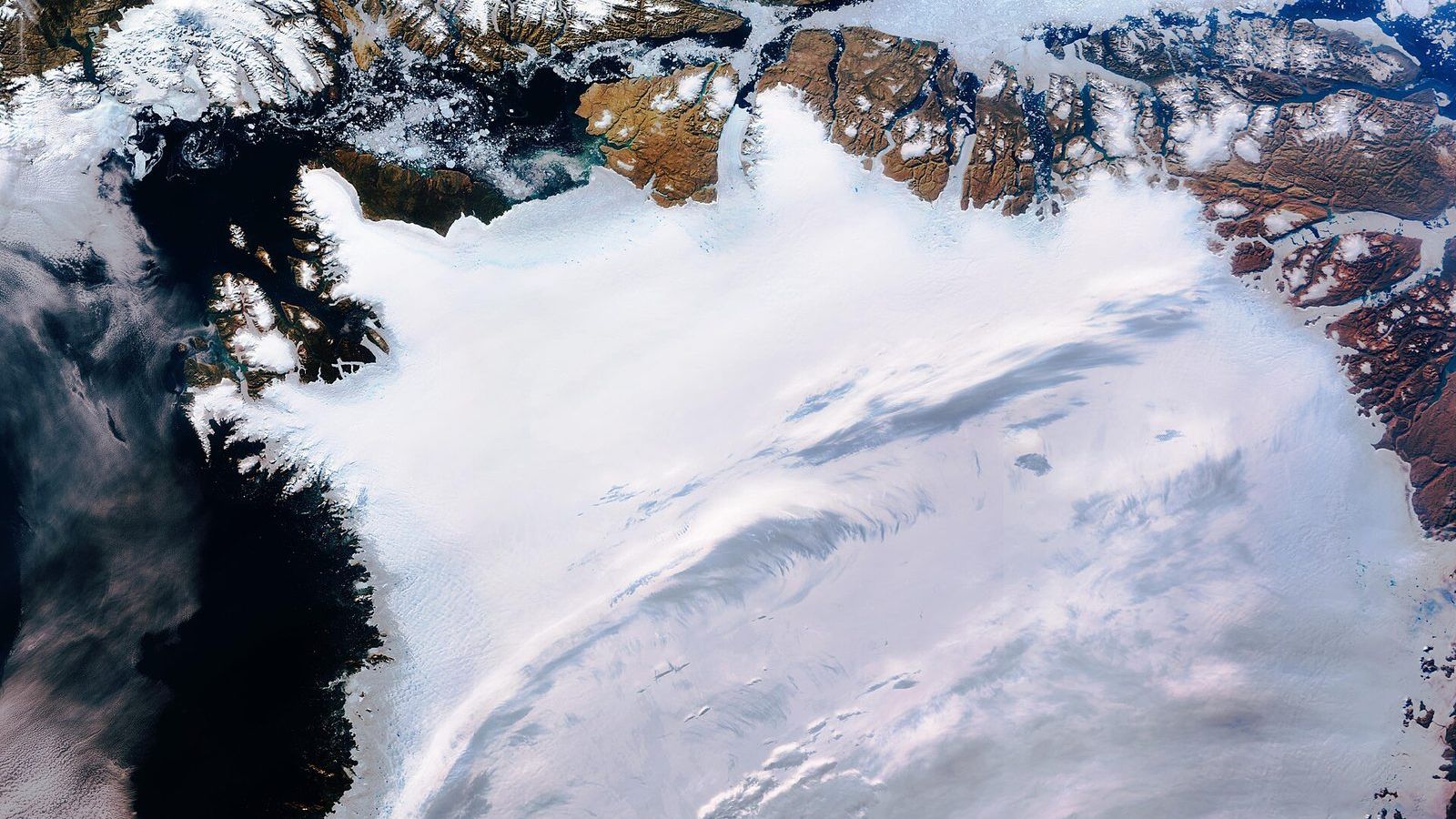
Greenland is losing about 270 gigatonnes of ice a year, which is about 0.009 Sv of fresh water, a tenth of the flux in the thought experiment above, and the subpolar North Atlantic has freshened measurably since the 1960s. The direct measurements of the overturning at 26.5° N, from the RAPID array since 2004, show large swings and no significant trend over two decades, which is too short a record to detect the slow decline the models project. Reconstructions from the temperature pattern of the North Atlantic, where a patch south of Greenland has warmed less than any other ocean region, suggest that the overturning is already weaker than at any time in the last thousand years, and other researchers dispute whether those fingerprints are reliable. The Intergovernmental Panel on Climate Change judged in 2021 that a weakening this century is very likely and a collapse before 2100 very unlikely, and a set of recent papers using statistical early-warning signs in the same temperature data has argued for a higher risk than that, with critics answering that the signs are not reliable. Stefan Rahmstorf of the Potsdam Institute reviewed the whole question in 2024 for the journal Oceanography, and the review is open to anyone.
The honest statement is this. The ocean has done it before, the mechanism is understood in outline and reproduced by models, the fresh water now entering the North Atlantic is a fraction of what Heinrich event 1 or Lake Agassiz delivered, and nobody can yet say where the threshold is. The thorium in the mud of the Bermuda Rise says that the threshold exists.
Unit 15 of the Ocean Masterclass works through the Greenland and ocean records, the Pa/Th method, Stommel's two-box model and its hysteresis, the deglaciation, and the present-day debate with its sources on both sides; Unit 8 describes the overturning as it is today. The full list of units is in the curriculum.