Are rogue waves real? The wave that settled it
Are rogue waves real? The wave that settled it came from a steel platform in the North Sea, on 1 January 1995. The Draupner platform measured a single wave that was far larger than the surrounding sea state, and it gave oceanographers a rare case where theory and observation could be compared directly.
Are rogue waves real? The Draupner record on 1 January 1995
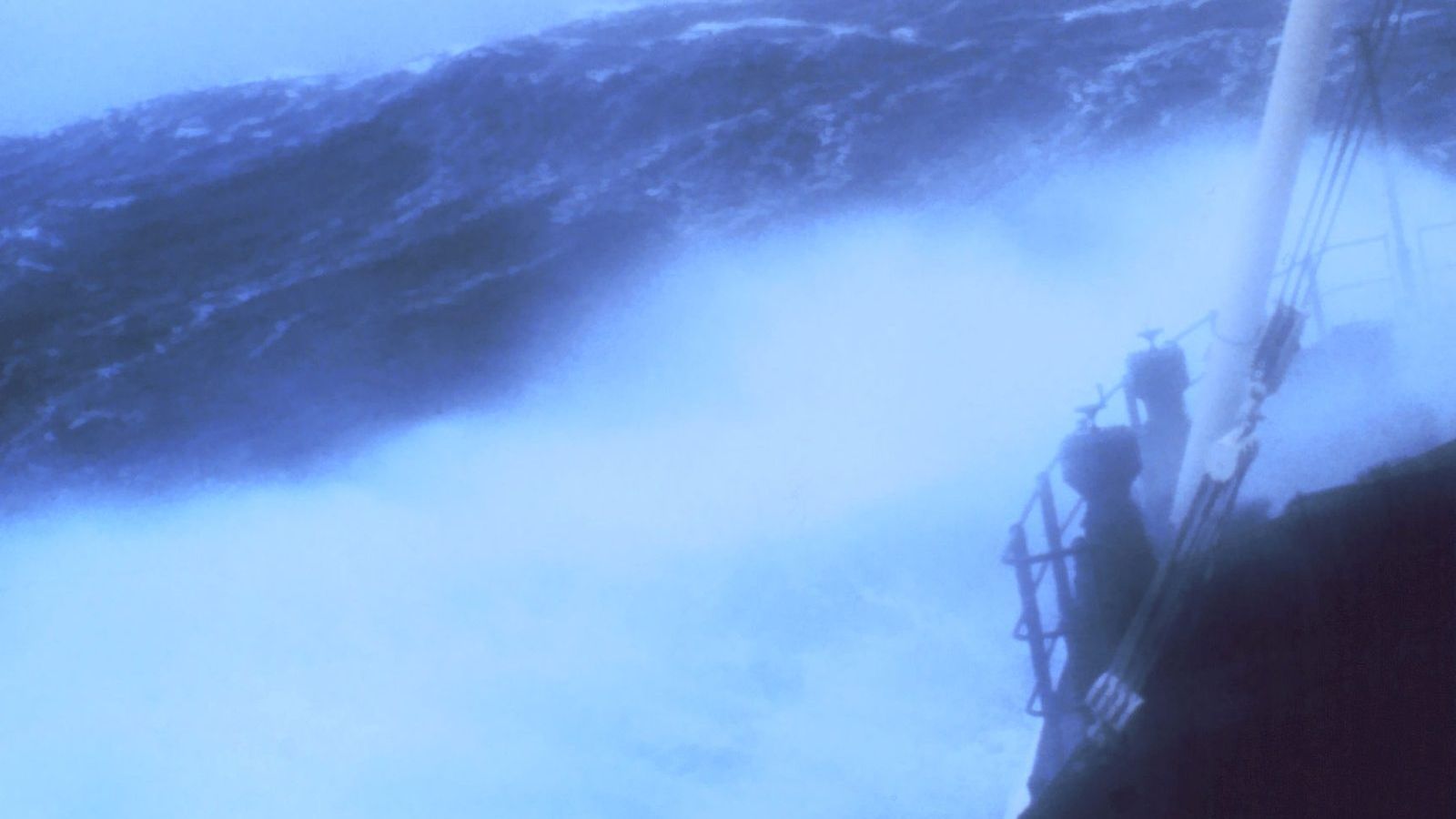
At Draupner, an oil platform in the North Sea, an upward-looking laser wave gauge recorded a wave with a crest to trough height of 25.6 m during a storm on New Year’s Day 1995. That height was striking because the surrounding waves were much smaller. The usual measure for sea state, significant wave height, was about 12 m, so the Draupner wave was more than twice the significant wave height. In oceanography, a wave that is much larger than the local sea state is often called a rogue wave.
The value of the record was not only that the wave was large. It was measured by an instrument, at a known place, at a known time, in an ordinary storm sea. Before that, many rogue wave reports came from ship crews, and some were hard to check. Draupner made the subject difficult to dismiss.
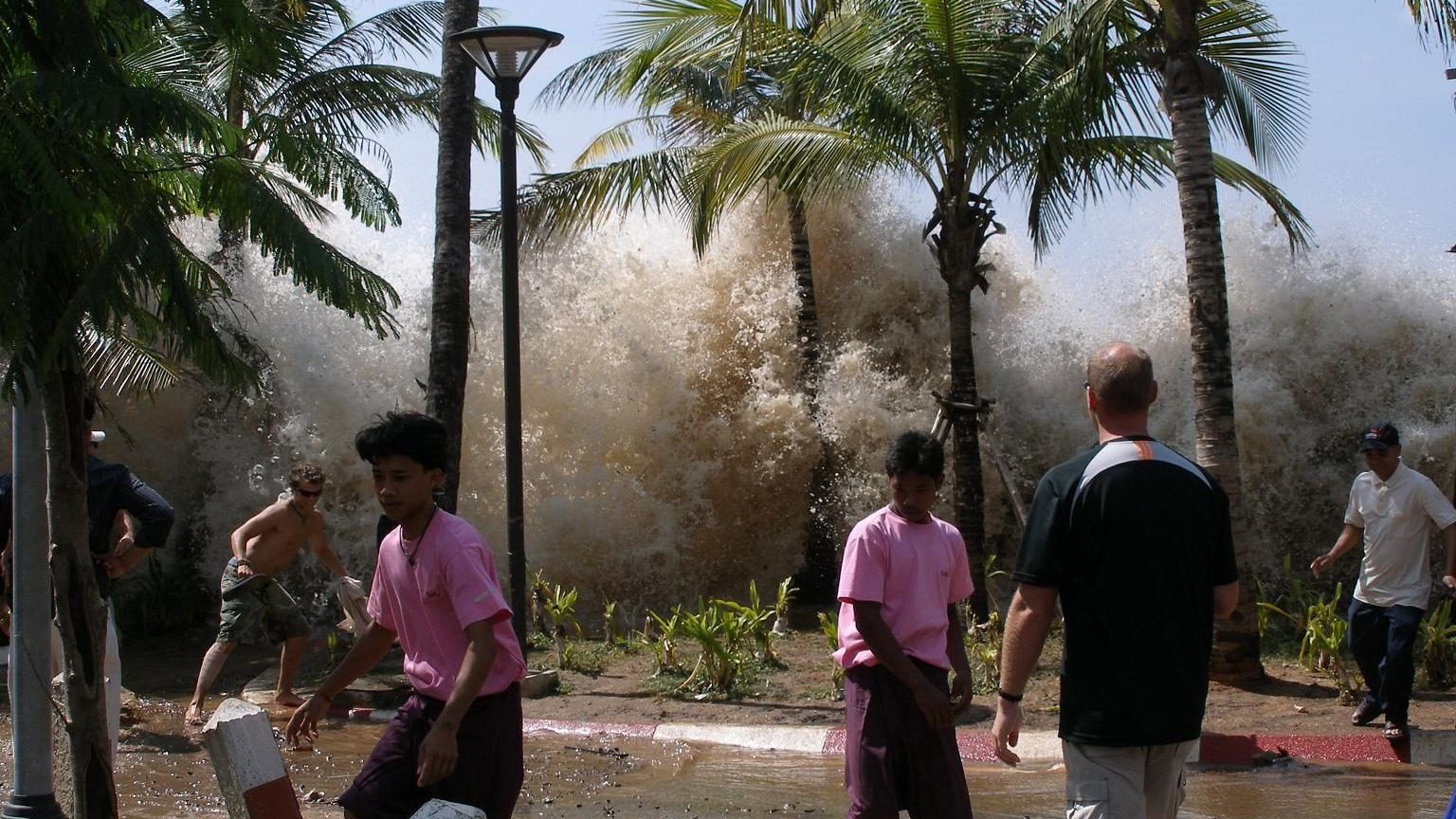
For a clear overview of how ocean waves are described, see Unit 6 of the masterclass, Waves and Tides, and the related Waves, tides, and tsunamis topic page. For a comparison with another fast-moving ocean wave, you can also read How fast does a tsunami travel?
The odds against it under Rayleigh statistics
Wave height in a random sea can be modelled statistically. For a simple sea made of many small, independent wave components, the surface elevation often follows a Rayleigh-like distribution for wave crests and heights. In that picture, very tall waves are rare, but they are still possible. The key point is that the Draupner wave was rarer than that simple model would suggest.
Using Rayleigh statistics, the chance of a wave as large as Draupner in that sea state was tiny, roughly at the level of one in 10,000 waves. That is small enough to surprise people, yet not so small that it can be treated as impossible. The record helped show that real seas can produce extreme waves more often than a simple Gaussian or Rayleigh picture predicts.
This matters because engineers use wave statistics to design ships, offshore platforms, and coastal structures. If the tail of the distribution is heavier than the simplest theory says, then rare events deserve more attention. The ocean does not need magic to make a rogue wave. It only needs the right combination of waves, currents, and water depth.
How rogue waves form in the ocean
Since 1995, oceanographers have learned that there is no single cause. Rogue waves can form through several mechanisms, and more than one may act at once.
- Wave focusing can happen when groups of waves travel at slightly different angles and arrive in phase.
- Current interaction can steepen waves when a wave train runs against a current, which shortens the wavelength and raises the height.
- Nonlinear effects can transfer energy into one unusually large crest instead of spreading it evenly across the sea surface.
Laboratory experiments, field observations, and numerical modelling all support these ideas. In the open ocean, the most dangerous cases often involve a mix of mechanisms rather than one neat cause. That is why rogue waves are now treated as a real part of ocean wave physics, not as a sailor’s myth.
A useful modern point is that a rogue wave is defined relative to its neighbours. A 20 m wave in a very large storm may be less unusual than a 12 m wave in a moderate sea. Context matters, and oceanographers now use that context when they compare observations with theory.
What the science after Draupner changed
The Draupner record changed the way researchers think about risk at sea. It pushed oceanography toward better wave measurements, better statistics, and better models of nonlinear wave growth. It also encouraged more attention to wave direction, currents, and the way storm seas organise themselves into groups.
That work has practical value. Offshore structures in the North Sea, the Atlantic, and other stormy regions must be built with rare extremes in mind. A design that works for the average sea may fail if an extreme crest arrives at the wrong moment. For that reason, rogue wave research now sits close to engineering, meteorology, and physical oceanography.
Two reliable starting points are the NOAA explanation of rogue waves and the classic Draupner analysis in Nature. The first explains the basic idea for a wider audience, and the second is part of the scientific case built from the Draupner record.
Why the Draupner wave still matters
The Draupner wave did more than settle an argument. It gave oceanographers a benchmark observation that still helps test models of extreme waves. If a theory can reproduce the sort of wave seen on 1 January 1995, it is closer to describing the real ocean. If it cannot, the theory needs work.
That is how a single measurement can change a field. One instrument, one storm, and one wave helped move rogue waves from folklore into physical oceanography.
Unit 6 of the masterclass uses observed waves to build the ideas behind wave height, wave period, and wave speed. This article fits that unit because rogue waves are an extreme case of the same physics discussed in Waves and Tides.
Frequently asked questions
Was the Draupner wave the first rogue wave ever seen?
No. People had reported giant waves long before 1995, but Draupner was one of the first cases measured clearly enough to test against wave theory.
Does Rayleigh statistics mean rogue waves should never happen?
No. It means they should be rare in a simple random sea. The problem is that the real ocean is more complicated than the simplest random model.
Can scientists predict rogue waves now?
They can estimate where the risk is higher, especially near strong currents and in storm seas, but exact prediction of one wave at one place and time is still very hard.