
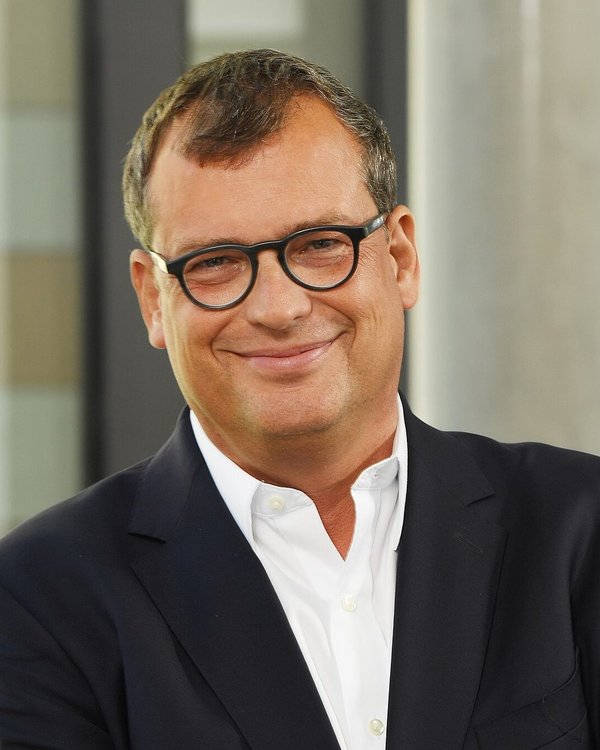
Photo: Carsten Costard für das Max-Planck-Institut für Chemie, CC BY-SA 4.0, Wikimedia Commons
Gerald H. Haug
Max Planck Institute for Chemistry, Mainz, and ETH Zurich
- Research field
- Palaeoceanography, the ocean's role in the onset of the ice ages and in the glacial carbon cycle
Gerald Haug studies how the ocean shaped the climate of the last few million years, from the stratification of the polar oceans to the carbon dioxide of the glacial atmosphere. In 2005 he and ten colleagues read the sediments of Ocean Drilling Program Site 882 in the subarctic North Pacific and found that at 2.73 million years ago the surface stratified, late-summer temperatures rose by about 7 °C while winters and springs cooled, and ice-rafted debris began to arrive. They argued that the warm autumn sea supplied the water vapour that fell as snow over northern North America and allowed the first Laurentide ice sheet to grow. The unit uses the paper in the section on the onset of the Northern Hemisphere glaciation.
In the masterclass
Section 7, on the onset of the ice ages, presents the North Pacific record of Site 882 and the moisture argument.
The research is presented in Unit 14: The Ocean in the Ice Ages, in a research spotlight box that explains the result at the level of the unit and links it to what you have just learned.